In villages where silence grows,
The names are carved in tidy rows.
Stone sentinels in market squares,
Holding ghosts and old men’s prayers.
They stand where once the young men played,
Before the sun began to fade,
Before the mud and wire grew,
And took the boys the parish knew.
No longer flesh, but weathered grit,
Where mourning mothers used to sit.
The grey stone keeps a heavy trust:
Introduction
The Great War in the Villages was a project involving a number of Dene Valley u3a members The project lasted from 2010 to 2014. Its main objective was to understand the impact of the first World War 1 on so many in South Warwickshire. Approximately 700,000 to 750,000 British soldiers who died during World War I were never returned to Britain, as the government did not repatriate the bodies of the fallen.
Instead, they were buried in Commonwealth War Graves Commission cemeteries or commemorated on memorials near where they fell in France, Belgium. These are often referred as “silent cities” and village crosses serve as the “empty graves”
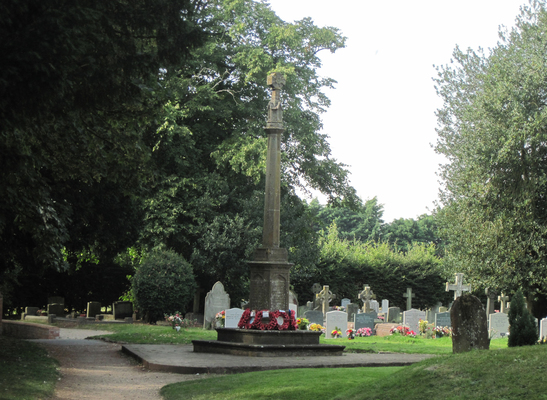
A few years after the war ended most villages erected their own memorials to the fallen, to serve as a reminder of the sacrifice made. Sacrifices most keenly felt by family and relatives of these who never returned. Given the massive number of British casualties, virtually every Warwickshire village has a memorial to the fallen. Many of these monuments are carved from Portland limestone, designed to stand out against the greenery of a village common.
Most memorials list names by family, showing how entire lineages were often lost in a single conflict. What ever the type of memorial, names of the fallen were inscribed.It was those names that became the starting point for the project. This first project was later expanded to include two others.These covered a local hospital housing wounded soldiers and finally survivors from Gallipoli campaign.
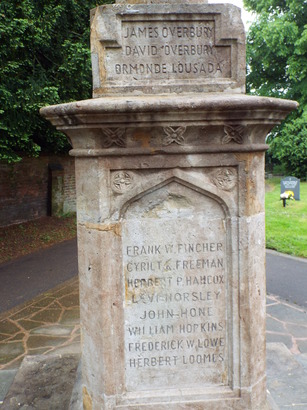
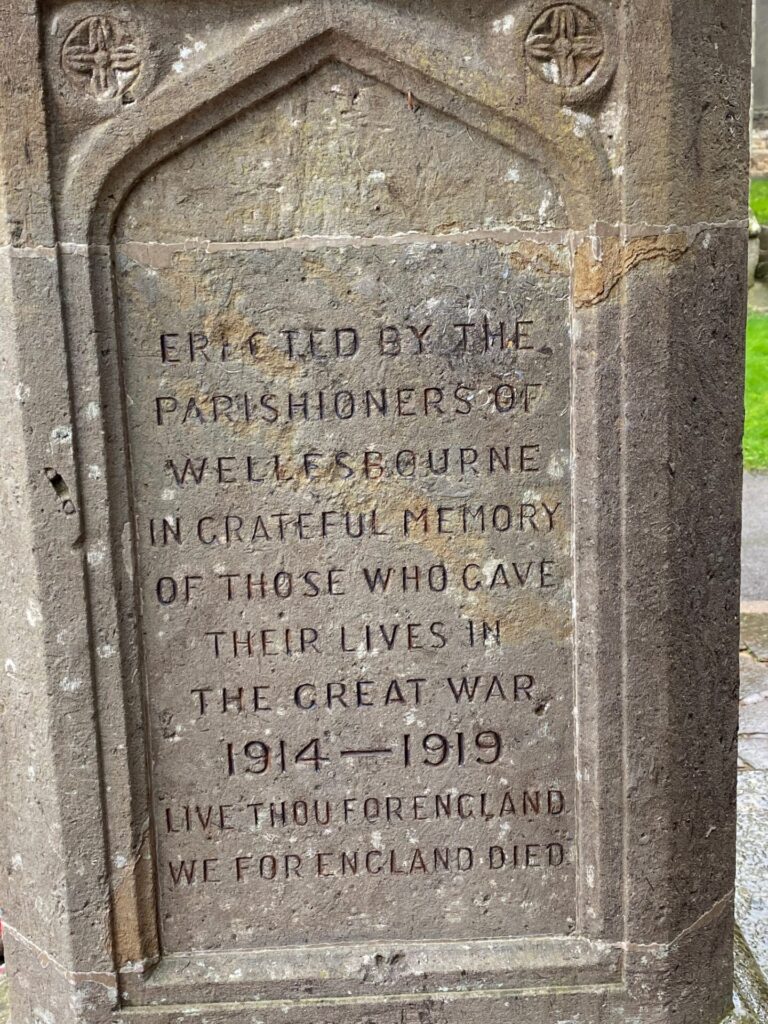
This fascinating project gathered information of those who went to war, those who stayed at home, Plus an insight into life in Wellesbourne and surrounding villages.
You can see a lot more of the research results of our work on the Great War using the link below
Acknowledgement : Michael Dane